

RICHARD HART BAKER: THE MAN BEHIND THE CLIP
There is a moment in every public pile-on where language stops being about meaning and starts being about damage. The Richard Hart baker controversy is one of those moments.
Last week, a few seconds of careless, compressed speech — spoken in the shorthand of a trade — were cut from their context and released by a Mexican food influencer into an ecosystem that rewards outrage over understanding. What has followed this week has not been critique, but erasure: of intent, of character, and of a lifetime of work. It has been devoid of balance and has brought out a level of hostility that is frankly frightening and totally unacceptable.
I know Richard. Not as a headline. Not as a clip. As a human being. He’s a kind, generous, funny, hard working, brilliant baker who has inspired and supported bakers all over the world. His bread is amazing. His skills as a sourdough baker are absolutely phenomenal, and in the early days of sourdough as its popularity has risen he is, like Chad Robertson, Richard Bertinet, Dan Lepard, and Peter Reinhart (and I think it is fair to include myself here) one of the originals creating knowledge through hundreds of hours of dedicated work, inspiring thousands of bakers to fall in love with transforming flour, water and salt.


![[+title+]](https://fermenta.io/wp-content/uploads/2024/11/76_640.jpg.webp)
![[+title+]](https://fermenta.io/wp-content/uploads/2024/11/coffee-1900194_640.jpg.webp)

![[+title+]](https://fermenta.io/wp-content/uploads/2024/11/olives-3466908_1280.jpg.webp)

![[+title+]](https://fermenta.io/wp-content/uploads/2024/11/soda-water-6841140_1280.jpg.webp)
![[+title+]](https://fermenta.io/wp-content/uploads/2024/11/queso-azul.jpg.webp)


![[+title+]](https://fermenta.io/wp-content/uploads/2024/11/como-hacer-tsukemoto.jpg.webp)


![[+title+]](https://fermenta.io/wp-content/uploads/2024/12/hacer-Amazake.jpg.webp)

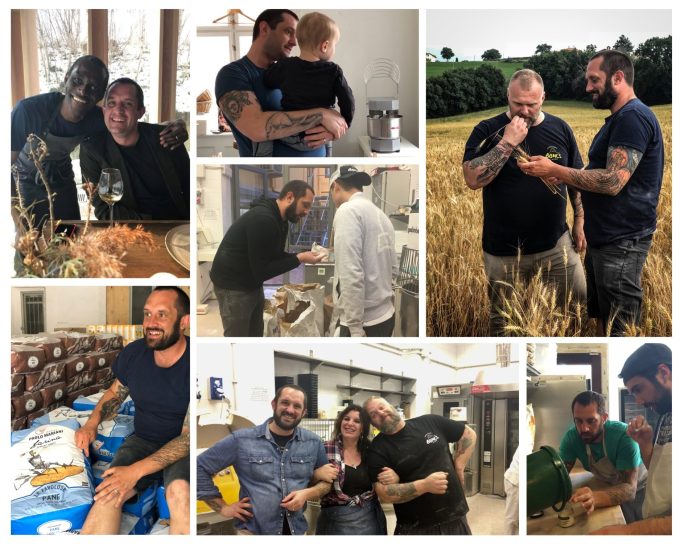
So how do I know Baker Richard Hart so well?
I’ve worked with Richard Hart, baker and founder of Hart Bageri, over many years and across many places — in the USA, in Italy, in France, in the UK, in Denmark. I worked alongside him at Tartine in San Francisco, where he spent seven years as head baker developing some of the most influential sourdough techniques in the world. I am mentioned in his James Beard Award-winning book, Richard Hart Bread: Intuitive Sourdough Baking — named one of the LA Times Best Cookbooks of 2024 — which is a testament to that craft.
No one has asked me to write this. In fact, I haven’t spoken to Richard for a long time. It’s fairly common knowledge that I find Henrietta, Richard’s second wife, overbearing, and in equally in turn she discouraged what was once a close professional working relationship, so our close working relationship has quietly been abandoned. So for clarity I’m writing this having not spoken to Richard for a long time, I have not been asked to write, but rather I believe that silence, in moments like this, feels like complicity — and because truth matters.
Why I am more qualified than most to bring context to what Richard said and what he meant.
My first degree is in the psychology of human communication — mind, meaning, discourse and representation. I spent three years studying the development of language, examining how language compresses, how shortcuts form, how meaning shifts between contexts. This is why I can see straight through what Richard meant. I understand how trade language works — how shorthand that functions perfectly inside a bakery can fail catastrophically outside it. Combined with forty years inside bakeries at the highest levels of craft fermentation, and my place within the inner circle of artisan sourdough bakers worldwide, I have both the linguistic training and the insider knowledge to recognise what happened here.


It is very clear to me that this was a failure of communication, not contempt.. Every trade develops its own compressed language — shorthand that works inside the room but fails outside it. This is where things fell apart.
Let’s start with what is fair to say about Richard
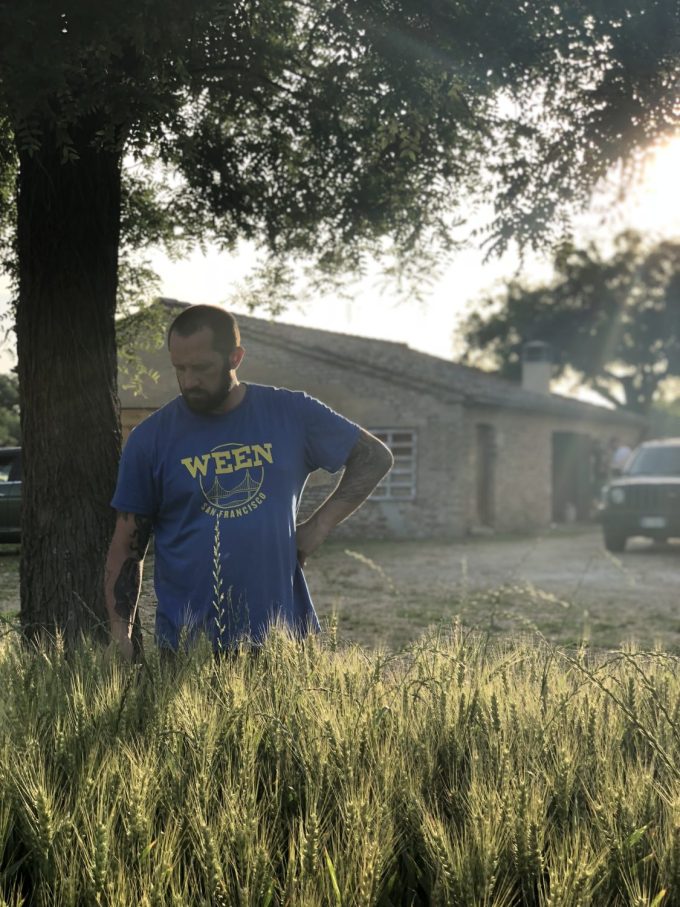
What Richard said was careless. Language does matter. He has acknowledged that and apologised. Anyone who understands food as culture, memory, and identity can understand why those words hurt when removed from context.
But a sentence is not a life. And a clip is not a conversation.
Inside a bakery — any bakery — language is compressed. “Bread” is shorthand for something very specific: long, slow-fermented wheat sourdough, the kind of bread that takes time, patience, judgement, and care. Everything else is qualified. That shorthand works privately. It fails publicly. This was a failure of communication, not contempt.
When Richard spoke about “ugly” bread, he was not speaking about Mexican people, or Mexican food culture. He was criticising industrial white bread — fast-produced, refined, nutritionally depleted bread that is disconnected from soil, from farmers, and from health. Bakers are often blunt about this. Crude, even. That does not make it cultural judgement.
And when he said Mexico did not have “much of a bread culture”, what he meant — clumsily — was that it does not have a widespread tradition of the specific bread culture he comes from: the long, slow-fermented sourdough of San Francisco and Europe.
He was not speaking about tortillas, maize, pan dulce, or the extraordinary depth of Mexican food culture. Anyone who listens to the full podcast hears him speak warmly about Mexico, about choosing to live there, about the food he loves, and about adapting his baking to place rather than imposing it.
None of that survived the clip.
A question worth asking: why now? The original podcast was published in April. The clip surfaced eight months later. What prompted someone to revisit it, edit it, and release it in December? I understand the person who posted the clip had previously visited the bakery, and that the visit did not go well. I am not making allegations. I am asking a question.
What did survive was the perfect storm: a decontextualised fragment, released months after it was spoken, amplified by an influencer economy that rewards moral outrage, landing in a city already raw with fear around gentrification, displacement, and cultural erosion. As reported in The Independent, a century of history was poured into twenty seconds — and Richard’s life was flattened to fit it.
This is where proportion matters
I am intolerant of arrogance. Always have been. I have walked away from more celebrated figures than I care to count because of it. If Richard were arrogant, I would not be writing this. What I have seen instead is humility. I first met Richard in the USA under a case of mistaken identity. He thought I was someone else entirely. He had no idea who I was, what I did, or why I was there. And yet he took time out of his day, made sure I had breakfast, and showed me around with generosity and patience. That is who he is when no one is watching.
I have seen him turn down lucrative business deals because the people involved were not kind, not fair, or not respectful to others. I’ve watched him give his coffee to a homeless person in Paris, give up his seat to an older person on a train, share his hard-won knowledge freely with bakers all over the world — encouraging them, training them, lifting them without reservation.
Richard Hart, baker and father of four, is a husband who loves deeply. He is someone who has shown up quietly when it mattered — including through collective efforts to support Ukrainians during times of crisis — without cameras, without credit, without algorithmic reward.
This is not the behaviour of a man driven by dominance or ego.
It is the behaviour of someone who believes — perhaps naïvely — that craft, generosity, and truth still count.
Richard has spent years championing bread as a soulful, “miraculous” craft. In his recent interviews, he emphasises that baking should be a source of joy and human connection rather than a rigid science. That philosophy — bread as love, bread as care — is not the language of someone who holds cultures in contempt.
I have written before about the dangers of building someone up too high. The problem with praise, when delivered too forcefully or too frequently, is that it can have the opposite effect. When the fall comes — and it always comes — it is harder and faster than it needs to be. Richard’s restraint has always been part of what made him compelling. He never shouted about his own skills. Now others are shouting for different reasons.
What troubles me most is not that people were hurt. Hurt deserves acknowledgement. What troubles me is how quickly hurt became permission to destroy — and how fear silenced those who might have brought balance. Dozens of people contacted me privately, saying they were uncomfortable with what they were seeing but too frightened to speak. That is not justice. That is intimidation dressed as virtue.
There is no media training safety net for people who follow their craft into public life. Founders are exposed. Investors push. Language compresses. Mistakes happen. When they do, we have a choice: correct, or crucify.
Criticising a sentence is reasonable. Condemning a person without context is not.
What Richard actually said
In the same interview, Richard describes Mexico as having “lovely people” with “beautiful hearts.” He talks about the food scene with love and excitement, comparing it to Copenhagen when he first arrived — “a hugely up-and-coming food scene.” He explains why he chose to live there: “I’ve been to Mexico quite a few times and I felt like I could live there.”
On his baking, he says: “I’m not going to make this city sourdough loaf of bread… maybe it should just be something completely different.” He talks about adding corn to his bread, about adapting to the place rather than imposing his style. “There’s a lot of beautiful corn,” he says. “I think I need to rethink things a little bit.”
When he talks about Mexican bread culture, he is comparing it specifically to the sourdough tradition he comes from. In the same breath, he acknowledges that the Mexican equivalent of a sandwich is the taco: “Their version of a sandwich is a taco. Everyone eats tacos. That is their sandwich.” This was said with admiration and curiosity. I know Richard and he utterly adores tacos — it was the first restaurant he took me to in Copenhagen, and he made me try all of them. This is not an insult, but social media has changed the meaning. It is deeply disturbing that his intent has been so distorted.
None of this was included in the clip.
What was included was 20 seconds, stripped of context, released 8 months later into an algorithm designed to amplify outrage.
Who is leading this
The people leading this pile-on are influencers whose platforms were built on reach, not bread. They have followers, not ferments. And the algorithm rewards them for outrage, not accuracy. I need to name what I have seen in the response to this. Multiple threats to Richard, with some very disturbing language. Throughout this week on Instagram, when I asked for context, I likewise received multiple racist comments, abuse, and threats.
Astonishingly, professional bakers have deliberately twisted my words to reframe me as elitist. Artisan Bryan — an influencer first, a baker second — wrote that Richard “chose to call a whole country’s bread ugly.” Which is not what happened. And he knows it.
This is what is driving the frenzy. The people shouting loudest are not Richard’s peers. They are not the bakers who have worked at his level, who understand what it takes to develop a craft over decades or who understand language. Those bakers have been largely silent — not because they agree with what happened, but because they are afraid.
Gusto Bread and Roxana Jullapat — both verified, both with platforms — accused those calling for context of “colonialism and imperialism” and having a “sense of superiority (moral, cultural, educational, religious).” When I offered balance, I was told my words sounded like “privilege with hints of racism.”
Meanwhile, comments calling British people “the original white trash” and saying “the only good food in England is immigrants food” were liked and left unchallenged. One user wrote: “Literally the last person I’m ever going to ask for their opinion on food is a British person.”
The irony is breathtaking. The language of anti-racism is being weaponised to shut down conversation — while actual racism flows freely in the other direction.
This is what Richard is facing. Not critique. Not disagreement. But the weaponisation of language designed to shut down any defence before it begins. If offering context is colonialism, if asking for proportion is privilege, then no one can speak — and that is the point.
Think for yourself
The most powerful thing you can do is use your own brain. Listen to the full interview. Read the transcript. Form your own view.
Social media is not asking you to think. It is asking you to react. It rewards speed over reflection, outrage over understanding, clips over context.
We have to start thinking for ourselves.
This is about more than Richard. It is about what we choose to believe — and whether we let an algorithm decide that for us.
If we care about culture, then proportion must matter. If we care about food, then intent, record, and contribution must matter. And if we care about truth, then we must be willing to listen to the whole — not just the part that fits a narrative.
This is not about excusing a mistake. It is about refusing to let Richard’s life be erased by one.
And it is about remembering that love, craft, and humanity rarely trend — but they are what endure.
Here is what you can do
If you are uncomfortable with what you have witnessed, here is what I am suggesting:
Speak. If you know Richard, say so. If you have a different experience of him, share it. Publicly or privately — but do not stay silent out of fear. Bullies used to hide in the dark. Now they perform in the artificial light of their phone — rewarded by an algorithm that mistakes cruelty and dopamine addiction for engagement. Refuse to be their audience. Unfollow them.
Question everything. When you see a clip, ask: what is missing? Who edited this? Why now? What did they have to gain? The algorithm rewards outrage. Do not feed it without thinking.
Refuse. Do not participate in pile-ons. Do not add to the noise. Scrolling past is also a choice — and sometimes it is the right one.
Support. If you are a baker, a chef, or anyone in this industry — we need to talk about how we treat each other when someone falls. This will happen again. It could happen to any of us.